
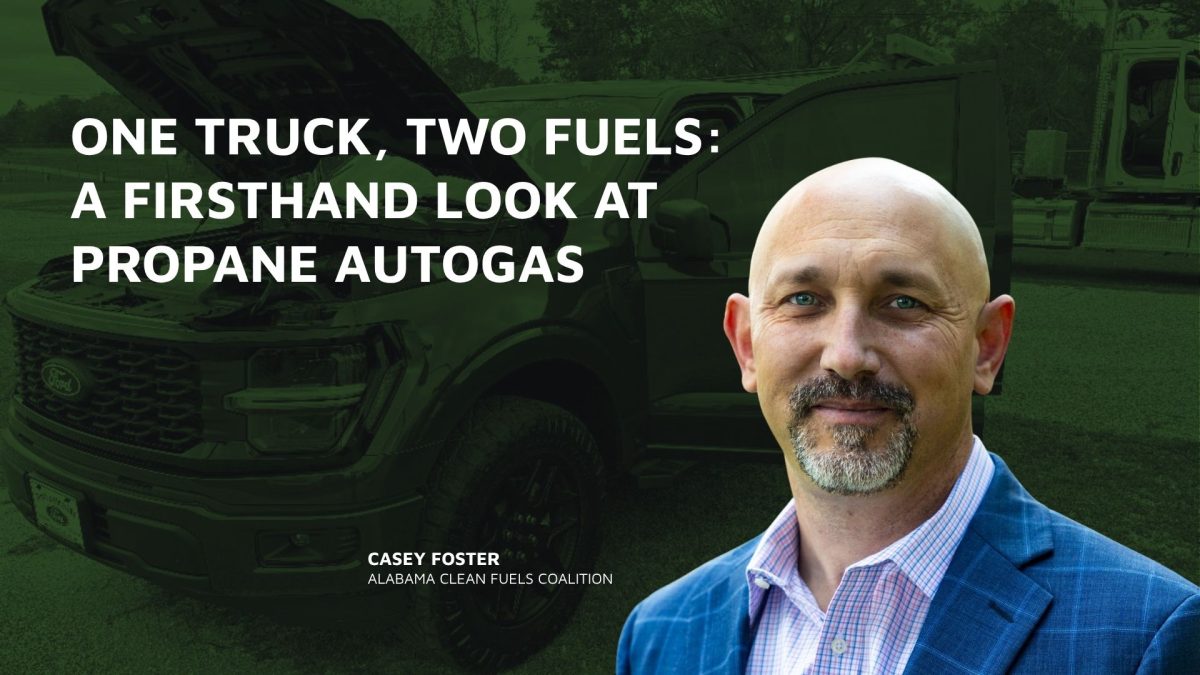
When it came time to purchase a new truck, Casey Foster, Executive Director of the Alabama Clean Fuels Coalition (ACFC), had a clear goal in mind. He needed a vehicle that could handle everyday demands—towing, hauling, and long drives—while also offering a smarter approach to fuel.
After weighing his options, Casey chose a 2024 Ford F-150 equipped with a propane autogas (LPG) bi-fuel system. The decision wasn’t just about performance—it was about practicality, cost savings, and long-term value.
Built for Work and Flexibility
Casey’s truck operates on both gasoline and propane, giving him flexibility on the road. The system starts on gasoline to complete standard engine diagnostics, then automatically switches to propane. If the propane tank runs low, the truck seamlessly transitions back to gasoline—no disruption.
The propane tank is installed where the spare tire would typically go, which means the full truck bed remains available for hauling materials, equipment, or anything else the job requires.
Real Savings Over Time
In just one year of driving, Casey has saved nearly $2,000 on fuel costs. That’s a meaningful difference for any driver—especially those who rely on their trucks daily.
Propane autogas is often less expensive than gasoline, and its stable pricing can help drivers better manage fuel expenses over time. For fleet operators and individual drivers alike, those savings can add up quickly.
A Cleaner, Domestic Fuel Option
Beyond cost, propane offers environmental and energy benefits. It’s a clean-burning fuel that can reduce certain emissions compared to conventional gasoline. It’s also produced domestically, which supports American energy independence and reduces reliance on imported fuels.
A Practical Choice for Today’s Drivers
For drivers who need a dependable truck but want more control over fuel costs and energy choices, propane autogas presents a strong option. Casey’s experience shows that alternative fuels aren’t just for fleets or niche use cases—they’re a practical solution for everyday drivers across Alabama.
Whether you’re hauling materials, towing equipment, or commuting long distances, a bi-fuel vehicle can deliver the performance you expect—with added savings along the way.
Interested in learning more about propane autogas or other alternative fuel options?
Visit Alabama Clean Fuels Coalition to explore resources, programs, and guidance for drivers and fleets across the state.